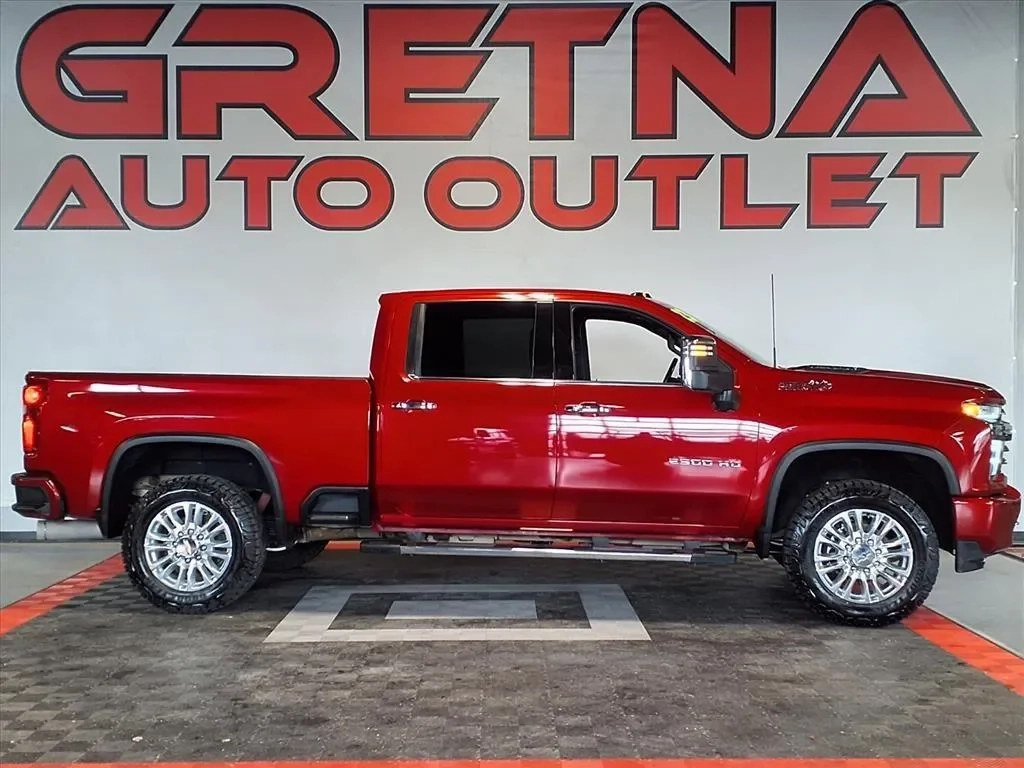

Average price:$61,988
Average mileage:53,142 mi
Typical price range:$61,988.00 – $61,988.00
Days on lot (avg): days
Diesel trucks aren’t smarter purchases. They’re heavier commitments.
In Nebraska, you’re mostly looking at ¾-ton and 1-ton trucks like the Ford F-250 Super Duty, Ram 2500, and Chevrolet Silverado 2500HD. Model years 2012–2019 dominate the used market.
Prices aren’t friendly. A diesel with 120,000–180,000 miles still sells for $28,000 to $45,000. Gas trucks at the same mileage are often $8,000–$12,000 cheaper.
That gap doesn’t disappear.
Diesel engines pull hard. That’s the whole point.
A 6.7L Power Stroke in a Ford F-250 Super Duty puts out over 900 lb-ft of torque in newer versions. Even older ones are strong.
Towing 10,000–15,000 lbs feels controlled instead of strained.
Diesels can run 250,000+ miles. Some hit 300,000.
That only happens with maintenance. Oil changes take 10–13 quarts. Fuel filters matter. Ignoring upkeep kills the advantage.
If you’re pulling trailers regularly, diesel works.
Less engine strain. Better fuel efficiency under load. More control on long highway pulls.
Gas trucks can do it. Diesels do it with less stress.
Diesels are efficient at steady speeds.
20–22 mpg on the highway is common for a ¾-ton diesel if you’re not towing. That’s better than most gas heavy-duty trucks.
Everything costs more.
Oil change: $120–$200.
Fuel filter service: $100–$300.
Injectors: $2,000–$4,000 if they fail.
Then emissions systems.
Modern diesels (post-2007) have EGR, DPF, and DEF systems.
These parts fail. Not sometimes. Eventually.
DPF replacement can run $2,000–$4,000. DEF system issues trigger limp mode. You don’t ignore it—you fix it or the truck won’t run properly.
Short trips make it worse. The system needs highway driving to clean itself.
You pay more for diesel. Always.
Even high-mileage units carry inflated prices because buyers chase the “long life” idea.
That only pays off if you actually use the truck hard.
A lot of used diesel trucks in Nebraska come from towing or farm use.
That’s not automatically bad. It means the truck worked.
But heavy use accelerates wear in transmissions, suspension, and cooling systems. You’re buying something that already did hard miles.
Low mileage diesel trucks exist. They’re priced high for a reason.
A 2016 Ram 2500 with the 6.7L Cummins in Grand Island, 148,000 miles, listed at $34,500.
Previous owner towed a livestock trailer regularly.
Engine ran strong. No smoke, no obvious issues.
Inspection showed front-end wear—ball joints and tie rods needed replacement. About $1,200 in parts and labor. Not catastrophic. Just the cost of a truck that worked.
Diesels don’t like short trips.
Cold starts, short drives, shut off. That builds up soot. The emissions system can’t complete regeneration cycles.
You end up with clogged components and warning lights.
If your driving is mostly under 15 minutes, diesel works against you.
Demand stays high because of agriculture and towing needs.
That keeps diesel prices elevated, even when mileage is high. You’re not getting a deal. You’re paying for capability and reputation.
You get strong towing power, better highway efficiency under load, and long engine life if maintained.
You take on higher upfront cost, expensive maintenance, and emissions system problems that don’t care how careful you are.
Diesel makes sense when the truck works regularly. If it doesn’t, you’re paying extra to create problems.
Our Nebraska team knows Diesel trucks inside out. Call, text, or email — we’ll get you an answer today.